

The Aplio i800 Takes Exotic Animals Imaging to the Next Level
Ardiaca García, María; Bonvehí Nadeu, Cristina; Montesinos Barceló, Andrés.
The Aplio i800 is a considerable advance in ultrasound technology, offering high-resolution images and high frequency transducers that are valuable in any clinical setting. The system’s wide range of transducers and Superb Micro-vascular Imaging (SMI) modality have convinced a leading Spanish veterinarian to chose Canon Medical to carry out her ultrasound examinations. Dr. Maria Ardiaca, director of a veterinary centre specialising in exotic pets in Madrid, told VISIONS how she uses the Aplio i800 to diagnose and perform biopsies in her surprising patients.
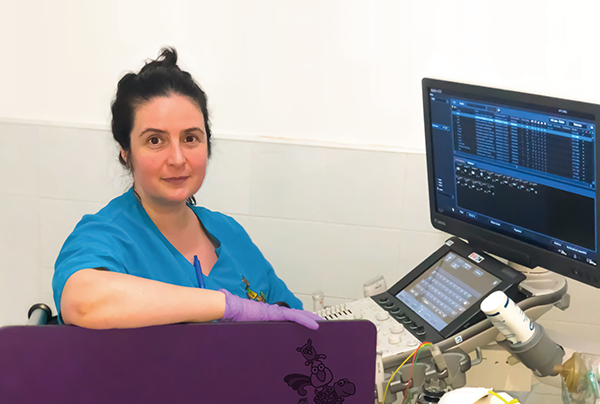
“The Aplio i800’s SMI expands the range of visible blood flow to visualise low-velocity microvascular flow in an unprecedented way.”
Dr. Maria Ardiaca, Director of the Los Sauces Veterinary Centre in Madrid
Pythons, bearded dragons and cockatiels are not the traditional fauna in Spain, but they are typical patients at Los Sauces Veterinary Centre, a leading pet clinic located in the heart of Madrid. The facility has been caring for exotic pets since 1995, when it was launched by Dr. Andrés Montesinos, a pioneer in exotic animals medicine. The centre’s nine veterinarians and seven nurses attend around 3,500 patients per year, from small mammals, birds, reptiles, amphibians, fish and even invertebrates.
“The wide choice of transducers is suitable for all patients, from the largest to smallest companion animals, and this makes the Aplio i800 well suited for a veterinarian clinic or hospital,” she said.
Dr. Ardiaca uses three configurations of probes: a ‘Sector Probe’ 3.5-12 MHz., a ‘Linear Array Transducer’ 4.0-18.3 MHz (intelligent Dynamic Micro-Slice - iDMS) and a ‘Linear Probe for small superficial parts’, ranging from 8.8-22 MHz, which offer high quality images. The 22 MHz hockey stick transducer is particularly useful with small pets, which constitute the vast majority of her patients. “Most of them weight less than one kilogram and many are thinner than 2-3 cm. I really appreciate resolution over penetration and need to work with high frequency linear transducers with good near field detail. This equipment offers outstanding resolution,” she said.
Echocardiography is difficult to perform in small animals but the sector probe 12 MHz transducer of the Aplio i800 is up to the task and better suited than other equipment. “It is a significant improvement over my old 7 MHz transducer in obtaining images of my patients’ small hearts at high frame rate,” she said.
Aplio i800’s ultra-wideband i-series transducers cover the same bandwidth as two conventional transducers, offering superior sensitivity and resolution for both near and far field. This groundbreaking transducer design helps provide better imaging regardless of the patient condition and helps to reduce costs.
Clinical Case: Metastatic Osteosarcoma in a Blue-Fronted Amazon Parrot (Amazona aestiva)
Dr. Maria Ardiaca, Los Sauces Veterinary Centre in Madrid, Spain
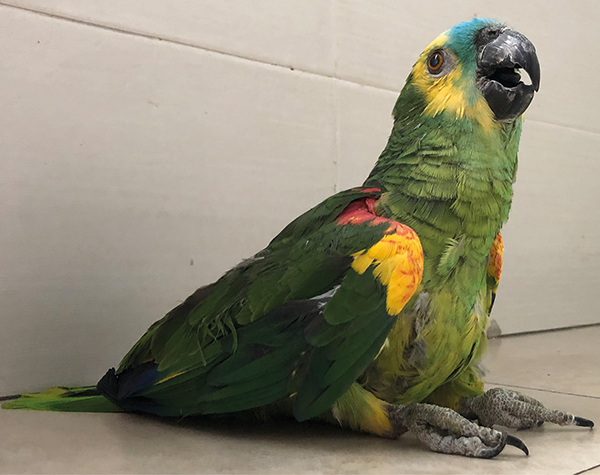
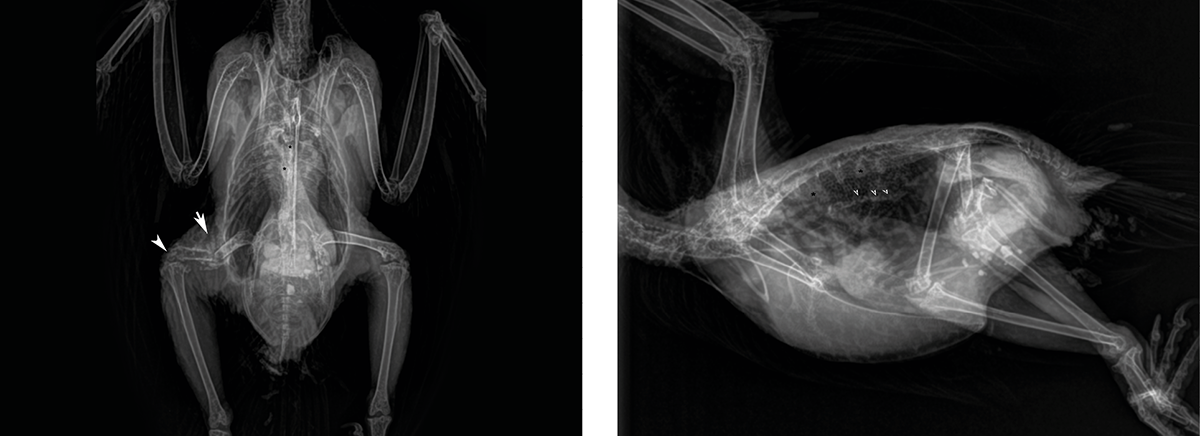
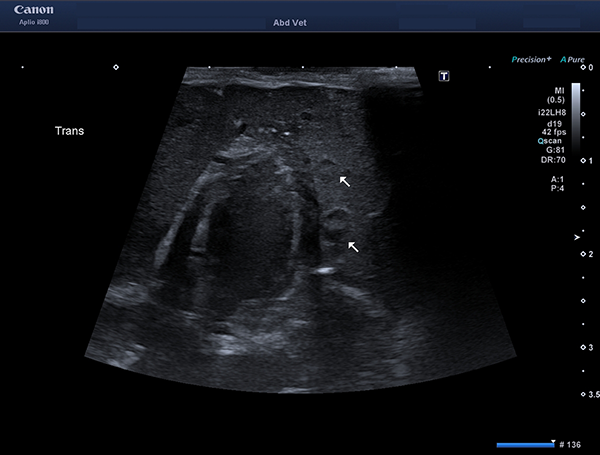
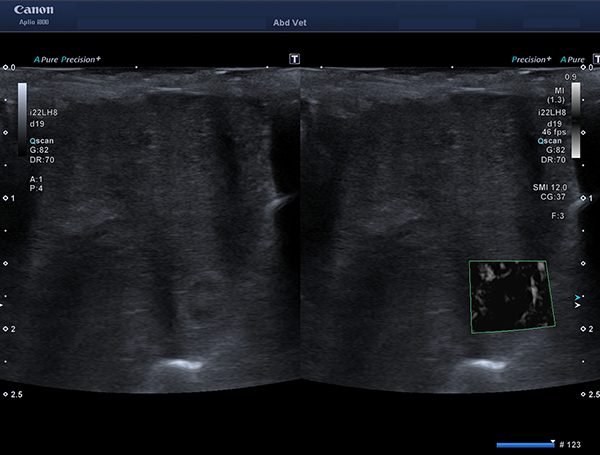
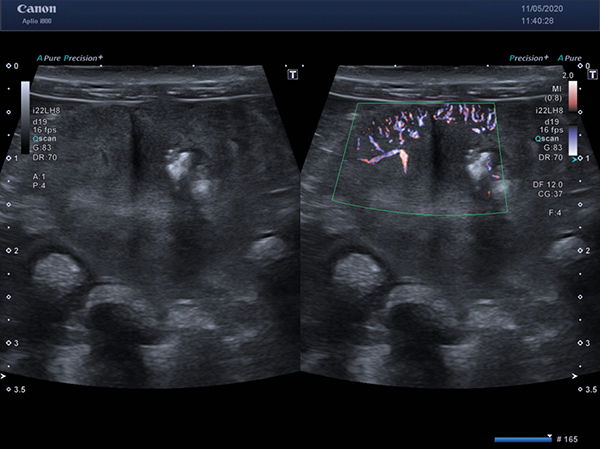
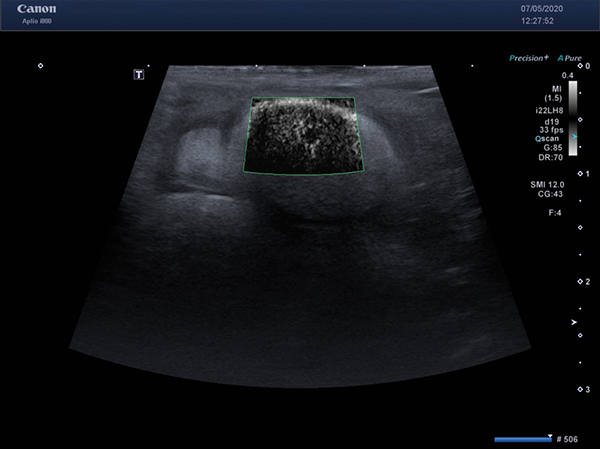
Figure 5: Sonographic image of coffee-bean shaped SOL in the liver with mild signal in the central area on the SMI perfusion evaluation.
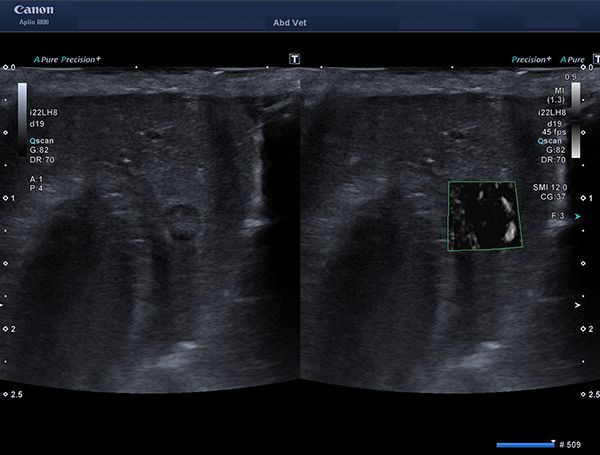
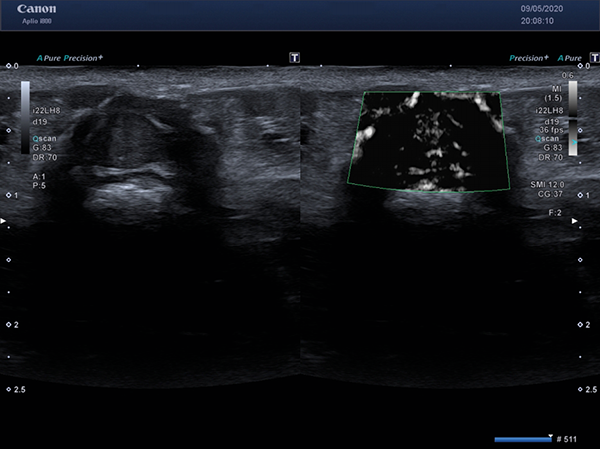
Figure 6: Sonographic image of coffee-bean shaped SOL in the liver with mild signal in the central area on the SMI perfusion evaluation.
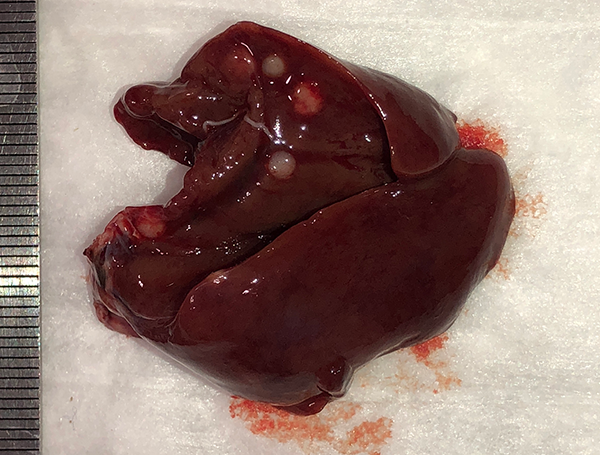
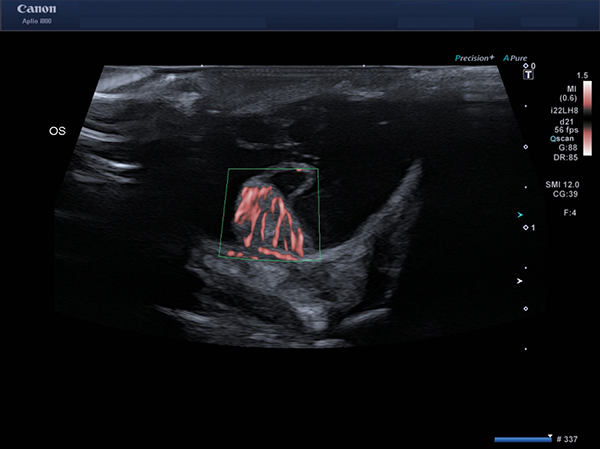
Fractures in elderly parrots must always include the differentials for pathological fractures, such as neoplastic disease and a thorough diagnostic approach is advisable.2 In this case, the recent femoral fracture was most probably due to the osteosarcoma that was not detected.
Osteosarcomas are sporadically described in the scientific literature in different avian species, most often appendicular osteosarcomas.1–5 Particularly in the blue-fronted Amazon parrot (Amazona aestiva) osteosarcoma, osteoma and chondrosarcoma are described.2,6,7
Osteosarcomas are locally aggressive tumors that cause osteolysis and local invasion and they metastasize frequently, while chondrosarcoma tends to be only locally invasive with low metastatic potential in birds.1–4,7 Several attempts of chemotherapy for osteosarcoma in birds were made without success.5
The differential diagnosis for the coffee-bean shaped lesions (sometimes also called bull`s eye or target-shaped) in the human liver ultrasonography includes abscess (particularly due to Candida sp. or Acinetobacter sp. Infection) and metastatic disease, considered the latest most probable.8–11
There are no scientific descriptions of this lesion in avian liver. In this case, the use of the novel SMI technique was particularly relevant as it allowed detection of very low flow perfusion that suggested neoplastic origin of the lesion, rather than an abscess. //
Biography
Dr. Maria Ardiaca is Director of the Los Sauces Veterinary Centre in Madrid. She received her veterinary degree at Madrid Universidad Complutense in 2002 and completed her university degree at wildlife recovery centres and at the Los Sauces Veterinary Centre in Madrid. She volunteered at the GREFA Wild Fauna Hospital and was an active member and president of the Veterinary Students’ Association for Exotic and Wild Animals Medicine in Madrid. She worked as a veterinarian in wild fauna rehabilitation at the O Campiño Animal Rescue Centre during the Prestige oil spill in Galicia, Spain in 2002.
Dr. Ardiaca is an accredited veterinary specialist in exotic pets (New Companion Animals) at the Association of Small Animals Veterinarians of Spain (AVEPA). She is also president and scientific committee member of the Exotic Vets Association of Spain (GMCAE-AVEPA).
She regularly speaks in Continuing education courses and masters for veterinarians who are interested in exotic animal medicine. She has presented at several national and international conferences and published scientific papers on exotic animals medicine.
References:
1 Robat C, Ammersback M, Mans C. Avian Oncology. In: Sanchez-Migallon Guzman D, Mayer J, eds. Veterinary Clinics of North America. Exotic Animal Practice. Elsevier; 2017:57-84.
2 Zehnder A, Graham J, Reavil D, McLaughlin A. Neoplastic Diseases in Avian Species. In: Speer B, ed. Current Therapy in Avian Medicine and Surgery. Elsevier; 2016:107-141.
3 Dittmer KE, French AF, Thompson DJ, Buckle KN, Thompson KG. Primary Bone Tumors in Birds: A Review and Description of Two New Cases. Avian Dis. 2012;56(2):422-426.
4 Fordham M, Rosenthal K, Durham A, Duda L, Komáromy AM. Intraocular osteosarcoma in an Umbrella Cockatoo (Cacatua alba). Vet Ophthalmol. 2010;13(SUPPL. 1):103-108.
5 Doolen M. Adriamycin chemotherapy in a blue-fronted Amazon with osteosarcoma. In: Proc Annu Conf Assoc Avian Vet. ; 1994:89-91.
6 Cardoso JFR, Levy MGB, Liparisi F, Romão MAP. Osteoma in a Blue-Fronted Amazon Parrot (Amazona aestiva ) . J Avian Med Surg. 2013;27(3):218-221. doi:10.1647/2012-010
7 Blume GR, de Oliveira AR, Mattioli MP, de Oliveira LB, Reis JL, de Sant’Ana FJF. Condrossarcoma vertebral em papagaio (Amazona aestiva). Cienc Rural. 2015;45(3):525-527.
8 Gomez Montes C, Rodríguez Idígoras M, Calderón Durán A, Medina Cáliz I, Ortega Tudela G, Castillo Narváez E. Lesiones ocupantes de espacio en el hígado: un gran reto diagnóstico. EuroEco Rev Digit Ecografía Clínica. 2011;2(1):12-14.
9 Salvatore V, Bolondi L. Clinical Impact of Ultrasound-Related Techniques on the Diagnosis of Focal Liver Lesions. Liver Cancer. 2012;1(3-4):238-246.
10 Wu M, Zheng QC. Case report: Real-time contrast-enhanced ultrasonography for the diagnosis of typical ‘bull’s eye̓ sign of hepatic abscess caused by Acinetobacter baumannii in a tumor patient. Exp Ther Med. 2016;11(3):929-932.
11 Dominguez Gonzalez E, Navarro Freire C, Navarro Sanchez C. Consideraciones actuales sobre el diagnóstico de metástasis hepática. Medisan. 2016;20(7).
Social Media


