

Taking Interventional Radiology to Infinity and Beyond
Interview with Jolimont Hospital in Belgium, sharing their experiences with the Alphenix 4D CT.
Jolimont Hospital is located in La Louvière, Belgium. The radiology service cares for about 500 patients per day, except in covid times, and is equipped with three CT scanners, one PET CT scanner, two MRI scanners and the Alphenix 4D CT.
Jolimont Hospital is located in La Louvière, Belgium. The radiology service cares for about 500 patients per day, except in covid times, and is equipped with three CT scanners, one PET CT scanner, two MRI scanners and the Alphenix 4D CT.
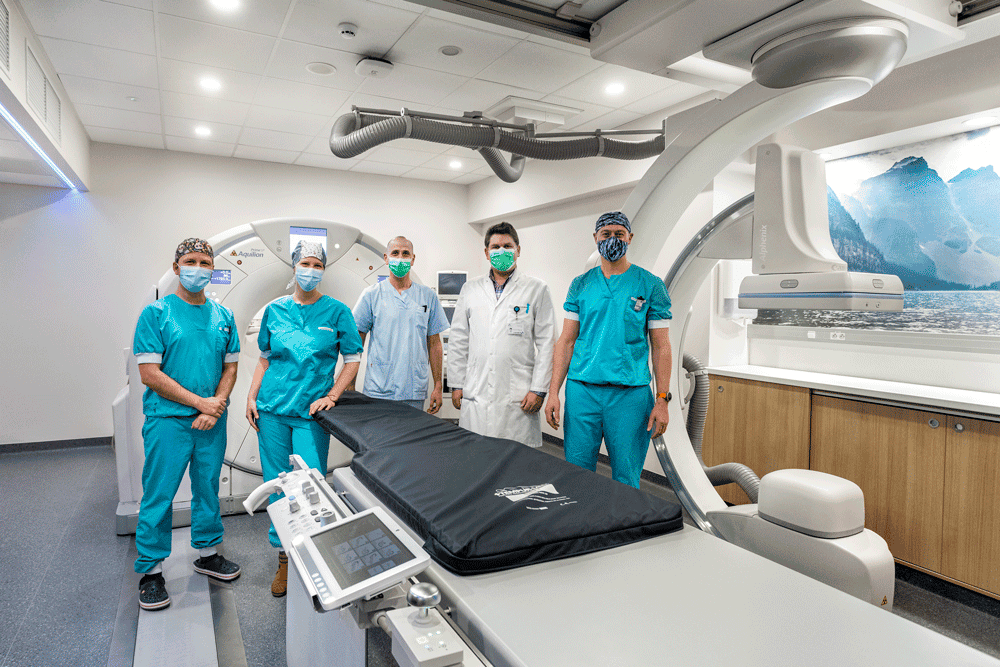 From left to right: Dr. Raphaël Leveque, Dr. Bénédicte Heynen, M. François Conti (Chief Radiographer), Dr. Paul Desclée (Chief Radiologist), Dr. Manuel Mignon.
Interventional radiology at Jolimont Hospital in Belgium has become an aerial experience with the Alphenix 4D CT. The equipment’s flexibility and versatility have helped the hospital to improve patient management and productivity, by enabling to provide diagnosis and treatment in the same interventional examination room.
With the investment, Jolimont now stands in the forefront of European interventional radiology (IR), being the first center in Belgium to provide an Angio-CT room. Dr. Paul Desclée, head of the radiology department, and Dr. Manuel Mignon, head of interventional radiology, explained how interventional radiology is living its true life with the system.
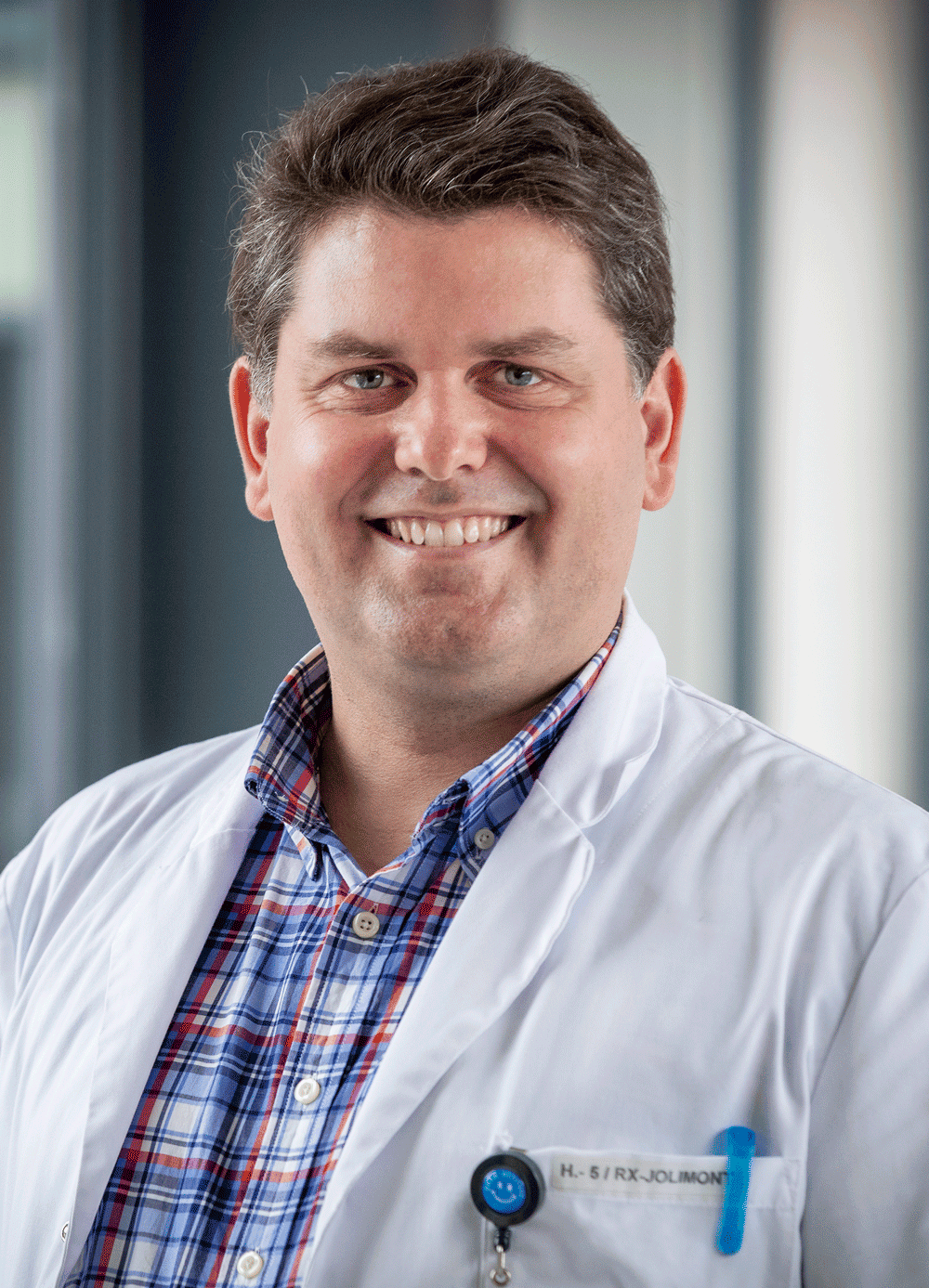
“ We’ve been positively surprised by this competitive low dose. The scanner provides low radiation and comes with iterative reconstruction as well as DLR. Also, procedures are shorter, so patients are less exposed to radiation dose. Everything is fluid and precise.”
Dr. Paul Desclée, Head of the Radiology Department,
Jolimont Hospital, Belgium.
A corner stone for IR
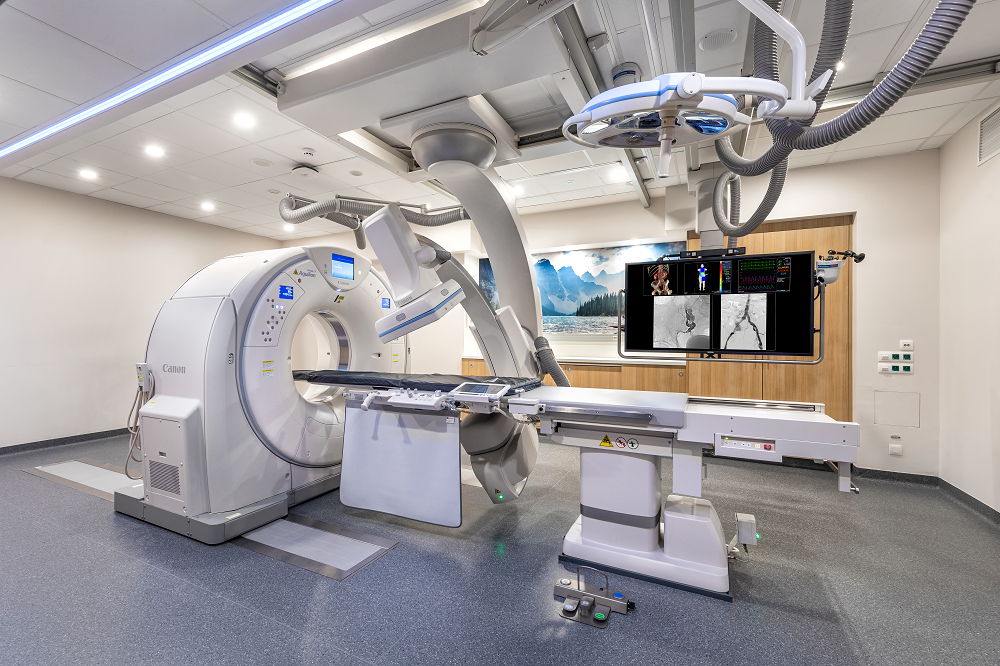
 Canon Medical's Alphenix 4D CT.
To support the growing demand, the hospital recently purchased the Alphenix 4D CT. Having robust equipment is the basis for delivering optimal care at a greater scale, according to Dr. Desclée. “The new room is a corner stone to offer better treatments to our patients,” he said. “Compared with traditional IR rooms, the Alphenix 4D CT opens a panel of possibilities, with improved quality, comfort and control.”
The new equipment makes a real difference in the center’s ability to deliver state-of-the-art IR on a regional level. “Any IR service can drain small fluid collections and perform simple biopsies, but with the Alphenix 4D CT we’re going further,” he said. “We now offer more therapeutic interventions and indications, and much more specialized, rare interventions on a much wider scale and for the whole region.”
Ever since the room was installed last spring, Jolimont has increased its IR activity by 10 to 20% providing more thermo ablations, interventions in bleeding polytrauma patients, and procedures in the intensive care and post-operative settings.
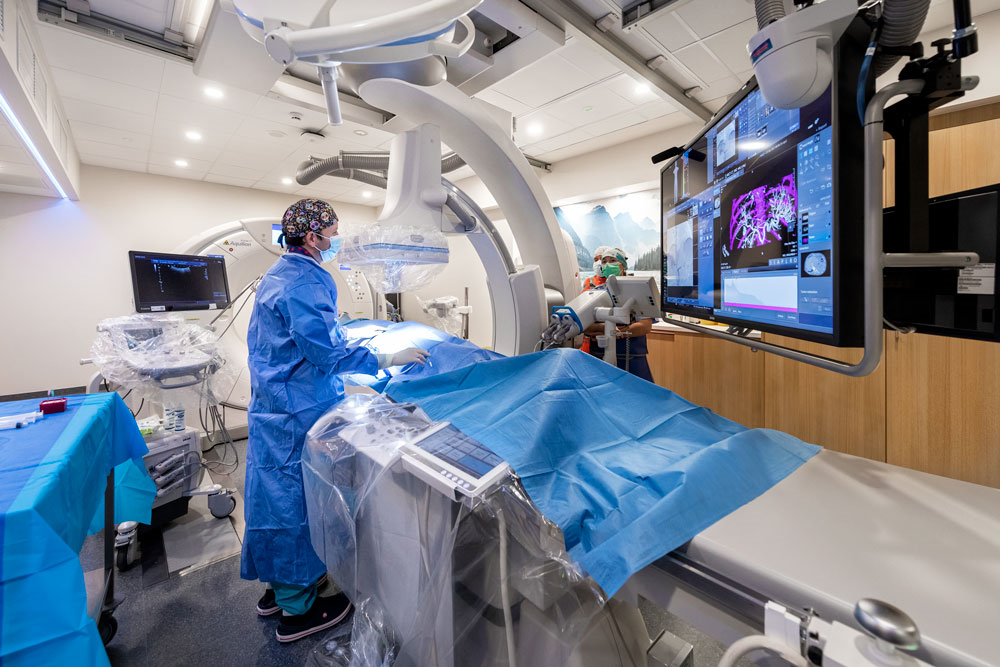
With the Alphenix 4D CT, the team is more confident when performing complex procedures, according to Dr. Mignon. “We don’t hesitate to perform thermal ablations thanks to the combination of angiography, CT and ultrasound,” he said. “We can easily move from one modality to another during the same procedure.”
The equipment is also ideal to carry out simple Angio-CT guidance to delineate a lesion before and/or after thermal ablation. “We don’t refrain ourselves from doing perfusion studies post-treatment,” he said. “That’s very impressive to have a direct result right after therapy. Before treatment, we can delineate the vessels that feed the tumor, and after we can assess the result of the intervention. That really boosts our satisfaction and confidence to see that the lesion was properly treated.”
The room also enables Jolimont to participate with unmatched ease and increased confidence in research projects, for example a US study to assess intra-arterial chemotherapy in stage III pancreatic cancer. The trial is the first of its kind to be conducted in Europe and focuses on those cancers that can’t be accessed with conventional surgery.
“We can now intervene in cases that would have been more challenging to tackle in a traditional angio room. We can do TIPS more easily and with a higher level of confidence,” said Dr. Mignon.
“We needed more space and comfort to carry out procedures that can be done in a traditional setting but are more time consuming and tedious,” Dr. Desclée echoed. “With the Alphenix 4D CT, interventional radiology lives its true life.”
An aerial, all-in-one solution that reduces dose
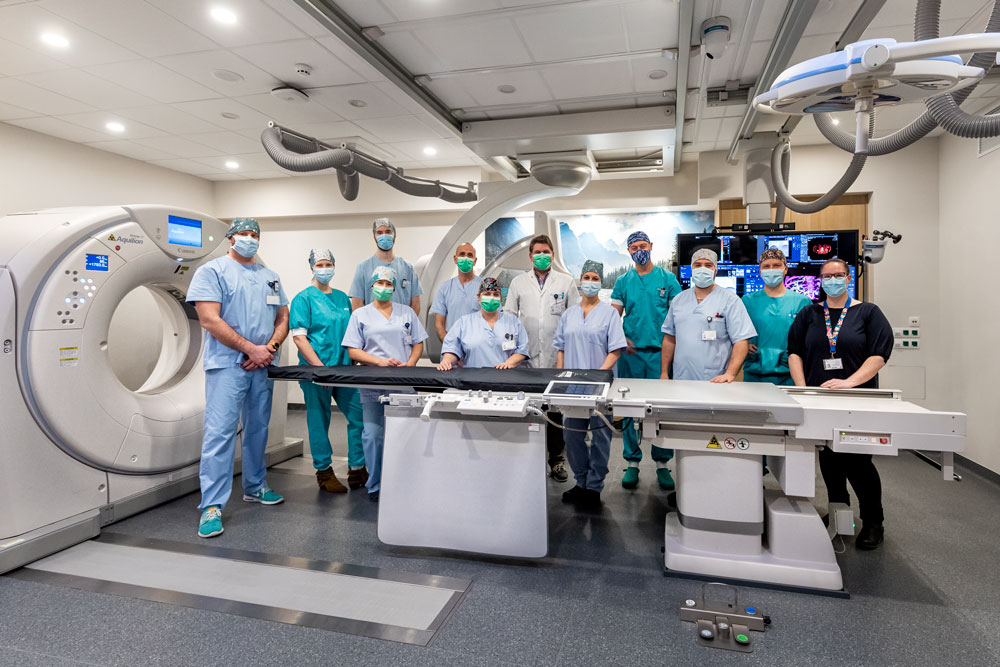 From left to right: Ludovic Riedel-Brichaux, Dr. Bénédicte Heynen, Martin Lebrun, Virginie Ramsdonck, François Conti, Leslie Dumst, Dr. Paul Desclée, Mélodie Liemans, Dr. Manuel Mignon, Kevin Hiersoux, Dr. Raphael Levêque and Stéphanie Ziernicki.
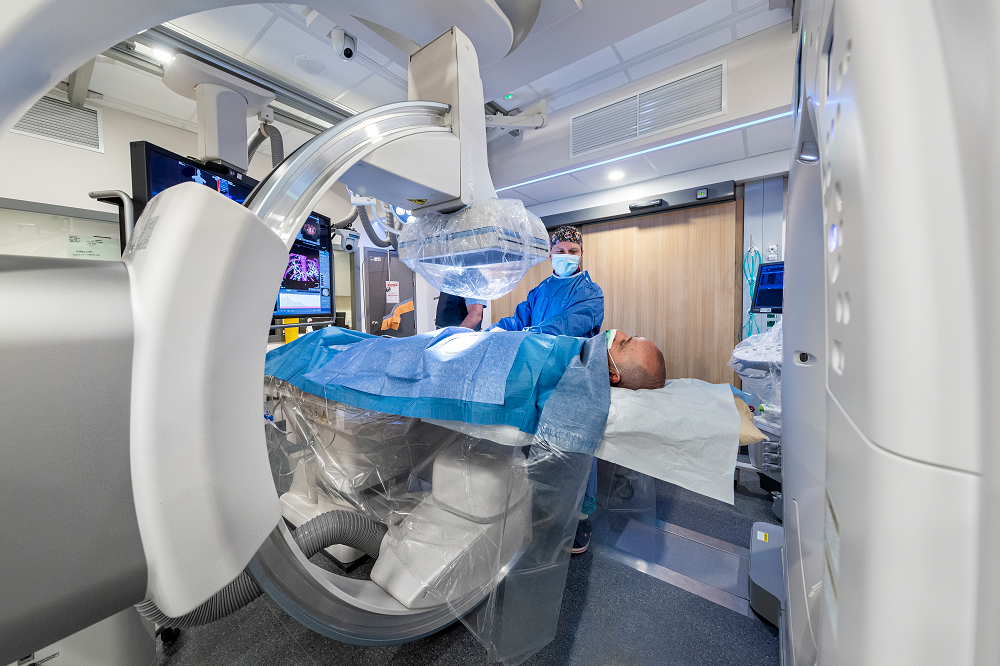
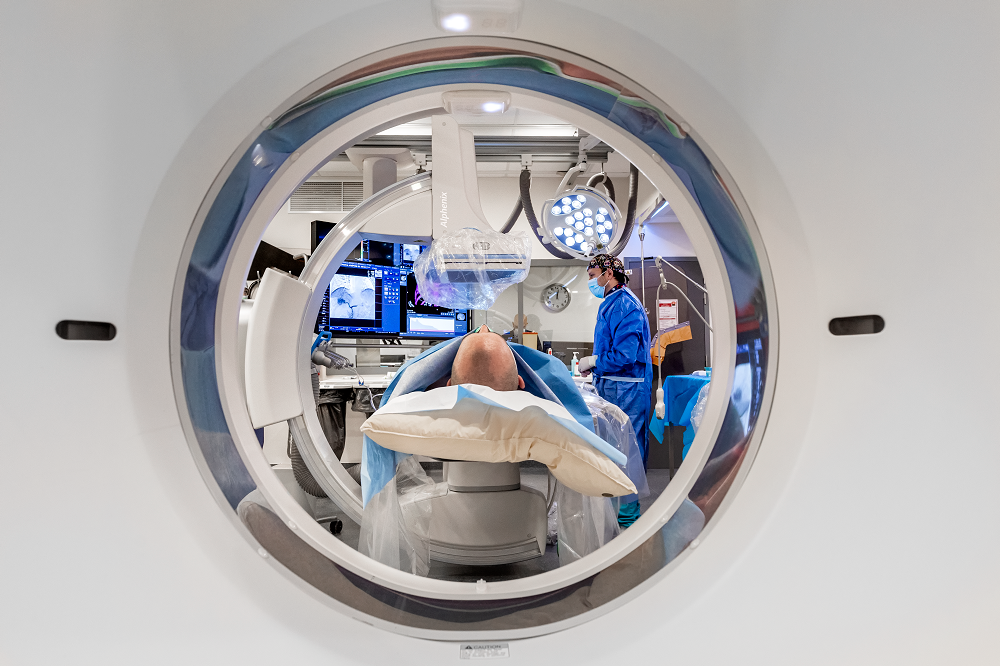
When he describes his experience working with the Alphenix 4D CT, Dr. Mignon is impressed by its flexibility. “It’s an areal equipment. The room has been well configured and we have this feeling of lightness, of moving from one procedure to the next with incredible ease,” he said.
The team switches from angiography to CT and back again with tremendous speed, using CT for a wide range of procedures from simple epidurals to complex biopsies that involve anesthetists.
The team is unanimous: the Alphenix 4D CT is comfortable and simple to work with, it seamlessly integrates with the system and provides excellent image quality. “Radiographers enjoy the equipment’s simplicity and pertinence,” Dr. Desclée said. “Physicians, radiologists and nurses like having it all: the layout, XXL screens, an examination table that can be moved with ease and precision.”
The Alphenix 4D CT has changed the way the team works, meeting a long-held desire to provide an all-in-one solution. “We’ve always preferred a short circuit, going from point A to point B as soon as possible,” Dr. Mignon said. “We also wanted to offer an all-in-one service to diagnose and directly move on to treatment without having to move the patient.”
“We had to scan patients at the CT scanner in the hospital and then take them to the interventional room for drainage,” Dr. Desclée added. “Now we can work much faster. As soon as we have a suspicion, we scan and drain right away if needed, all in the same room. It’s much more comfortable for the patient.”
The ability to diagnose and treat almost immediately translates into shorter procedures and a quicker recovery. Timely management of a polytrauma patient with splenic rupture enables to save two to three hours. In the case of an abscess, which is more complicated to drain, early treatment can reduce the patient’s hospital stay by days.
Another major reduction concerns radiation dose, which is significantly lowered with the Alphenix 4D CT.
“We’ve been positively surprised by this competitive low dose,” Dr. Desclée said. “The scanner provides low radiation and comes with iterative reconstruction as well as Deep Learning Reconstruction (DLR). Also, procedures are shorter, so patients are less exposed to radiation dose. Everything is fluid and precise.”
“We’re happy and much more confident with dose with the efficient combination of Spot Fluoro with angiography,”
Dr. Mignon confirmed. “We can target and control patient dose much better. We particularly like this Angio-CT combo to perform chemo and ablations, as well as thermal ablations.”
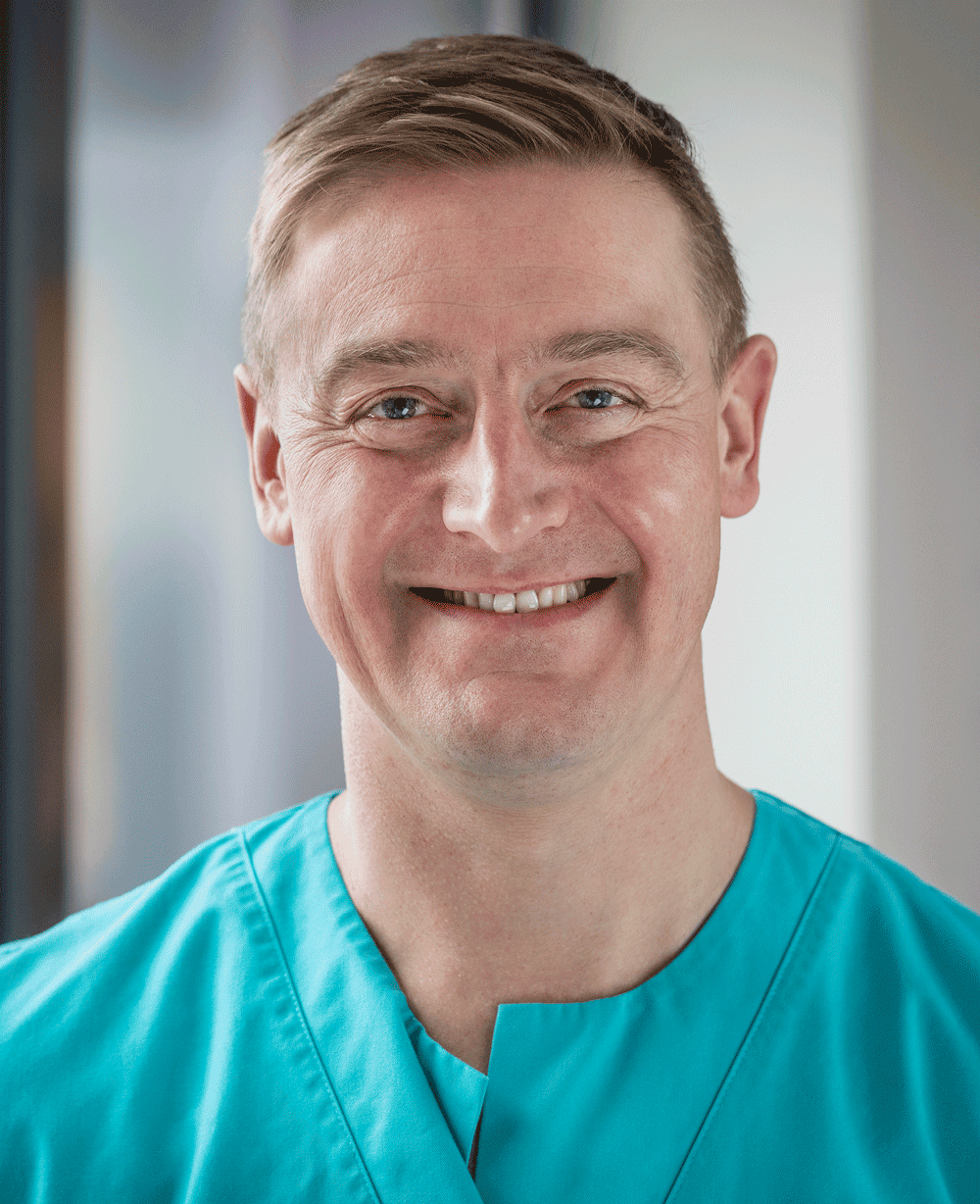
“ We can target and control patient dose much better. We particularly like this Angio-CT combo to perform chemo and ablations, as well as thermal ablations.”
Dr. Manuel Mignon, Head of Interventional Radiology,
Jolimont Hospital, Belgium.
Social Media


